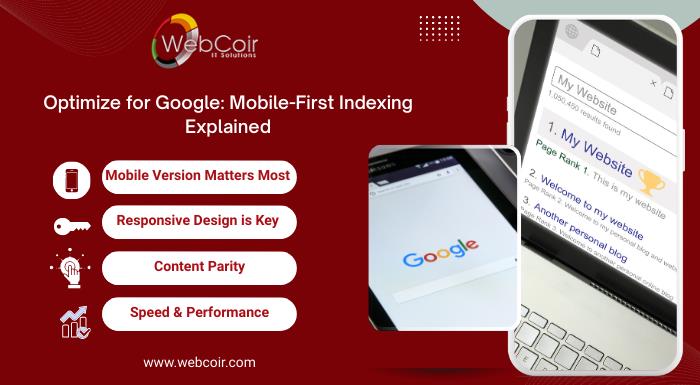
Mobile-First Indexing in SEO: Why Mobile Experience Defines Your Google Rankings
The way people use the internet has changed permanently. Most users now search, browse, and make decisions on mobile devices rather than desktop computers. Because of this shift, Google changed how it evaluates and ranks websites. Today, mobile-first indexing in SEO means that Google looks at your mobile website first when deciding how your pages should rank in search results.
If your website is difficult to use on mobile, slow to load, or missing important content, your rankings can drop even if your desktop site looks perfect. This guide explains how google SEO mobile first works, why it matters, and what you need to do to ensure your website performs well in a mobile-driven search environment.
What Is Mobile-First Indexing and How It Works
Mobile-first indexing in SEO refers to Google’s method of crawling and indexing websites using their mobile version as the primary source. In the past, Google used desktop pages to evaluate websites. Now, the mobile version is considered the main version.
How the process works:
Googlebot primarily crawls the mobile version of your website
The mobile content is indexed and used for ranking
Desktop content is only used if a mobile version is unavailable
This change does not mean Google only indexes mobile sites. It means the mobile version carries more importance when determining search visibility.
If your mobile website lacks content, has broken layouts, or performs poorly, Google assumes users will have a bad experience and lowers rankings accordingly.
Why Mobile-First Indexing Is Important for SEO
Understanding seo mobile first indexing is essential because it directly affects how your website performs in search results.
Impact on rankings
Google evaluates mobile usability, page speed, and content quality when ranking pages. Websites that provide a smooth mobile experience are more likely to rank higher.
User behavior alignment
Most users abandon pages that are slow or difficult to navigate on mobile. Google prioritizes websites that satisfy mobile users because that aligns with search intent.
Relationship with Core Web Vitals
Mobile-first indexing works alongside performance metrics such as loading speed, visual stability, and interaction responsiveness. Poor mobile performance weakens SEO signals.
Simply put, if your mobile site fails, your SEO fails.
Mobile-Friendly Website Design Best Practices
A strong mobile design is the foundation of mobile-first indexing in SEO.
Responsive design
Google strongly recommends responsive design because it allows one website to adapt to all screen sizes. This avoids duplication issues and ensures consistent content across devices.
Readable layout
Mobile users should not need to zoom to read text. Fonts should be large enough, spacing should be clear, and paragraphs should be short to improve readability.
Easy navigation
Menus must be simple and touch-friendly. Buttons should be large enough to tap, and important links should be easy to access without excessive scrolling.
Avoid intrusive elements
Pop-ups that cover the screen or interrupt content on mobile devices can hurt rankings. Google penalizes pages that block content or make it hard for users to continue browsing.
Content and Technical SEO for Mobile-First Indexing
Content and technical structure play a major role in seo mobile first indexing.
Content consistency
Your mobile website should contain the same important content as your desktop site. Missing headings, text, or links on mobile can reduce rankings.
Image and media optimization
Images should load quickly without losing quality. Large images slow down mobile pages and negatively affect user experience.
Structured data alignment
If you use structured data, it must be present on both mobile and desktop versions. Inconsistent markup can prevent Google from showing rich results.
Technical accessibility
Google must be able to crawl mobile pages easily. CSS, JavaScript, and images should not be blocked. Pages should load properly without errors.
How to Check and Optimize Your Site for Mobile-First Indexing
To succeed with google SEO mobile first, you must regularly test and improve your website.
Google Search Console
Search Console helps you identify mobile usability issues and performance problems. The URL Inspection tool shows how Google views your mobile pages.
Mobile usability testing
Testing tools reveal issues such as text being too small, elements being too close together, or content extending beyond the screen.
Page speed optimization
Mobile speed is critical. Reduce unnecessary scripts, compress files, and optimize fonts to ensure fast loading on mobile networks.
Common mistakes to avoid
Missing mobile content
Slower mobile pages compared to desktop
Blocked resources
Poor navigation and layout
Avoiding these mistakes improves both rankings and user satisfaction.
Conclusion
Mobile-first indexing in SEO reflects how people actually use the internet today. Google SEO mobile first strategies reward websites that prioritize mobile users through fast performance, accessible content, and clean design.
By understanding and applying seo mobile first indexing best practices, you ensure your website remains visible, competitive, and future-ready. Mobile optimization is no longer an option—it is a requirement for sustainable SEO success.
If your website delivers a strong mobile experience, Google is far more likely to reward it with higher rankings and better visibility.